

 CN
CN
 EN
EN
A large pharmaceutical company's pharmaceutical intermediate cooperation project
Customer Introduction:
Customer Name: A large pharmaceutical manufacturing enterprise
Industry: Pharmaceutical and chemical industry
Enterprise Scale/Background: One of the top 100 pharmaceutical companies in China, with products covering multiple treatment fields such as anti infective drugs, anti-tumor drugs, cardiovascular and cerebrovascular drugs, etc.
Project Background/Customer Pain Points:
Pain Point 1: With the advancement of new drug development and consistency evaluation of generic drugs, customers' requirements for pharmaceutical intermediates in terms of purity, chirality control, and inter batch stability are increasing, and traditional suppliers can no longer meet their quality standards and process matching needs.
Pain point 2: The key intermediates for multiple API projects of the customer are imported and purchased from abroad, which has a long procurement cycle, high costs, and the risk of supply chain interruption. Therefore, localization substitution certification is needed to reduce procurement costs and stabilize supply.
Pain point 3: The customer is looking for a partner who has GMP compliance awareness and can provide long-term stable supply. At the same time, the supplier is required to have process confidentiality and intellectual property protection capabilities.
Solution:
Core products/services used: Pharmaceutical pesticide intermediate series products
Solution Overview: The company leverages its technological advantages in organic synthesis and trace impurity control to provide customers with full process services for key pharmaceutical intermediates from sample development, small-scale testing, pilot testing to large-scale production, and cooperates to complete supplier certification and auditing.
Implementation key steps:
Based on the quality standards and process requirements provided by the customer, complete sample development and send for inspection confirmation.
Cooperate with customers to conduct on-site audits of suppliers, submit complete quality system documents and process information. After successfully passing the audit,
enters the small batch supply verification stage, tracking the performance of each batch of products in the customer's downstream processes and making necessary adjustments and optimizations. Gradually expand the supply scale and establish long-term strategic partnerships.
Implementation cycle: about 4-6 months
Implementation effect (data-driven):
Effect 1: The purity of key intermediates reaches 99.8% or above, and the content of single impurities is controlled below 0.1% [Data source: Customer quality department testing report]
Effect 2: The supply cost is reduced by about 25-30% compared to imported procurement [Data source: Customer procurement department calculation]
Effect 3: The delivery cycle is shortened from 4-6 weeks required for imports to less than 1 week, significantly reducing customers' safety stock requirements [Data source: Customer] Feedback:
Effect 4: For 12 consecutive months, the supply qualification has reached 99%, and the customer has evaluated it as an excellent supplier of the year and given recognition. [Data source: Customer supplier evaluation]
Customer testimony:
“ Jiayuan Biotechnology has demonstrated strong professionalism in the quality control and production process of pharmaceutical intermediates, with high batch stability and timely delivery. It has been rated as our excellent supplier for three consecutive years. I hope to deepen cooperation on more projects. ”
- Supply Chain Director
Related Products
More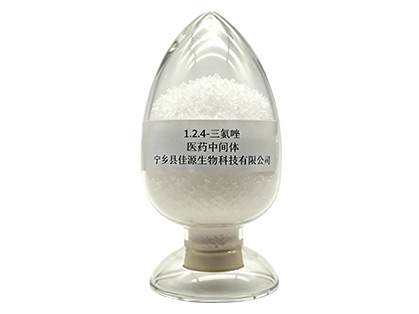
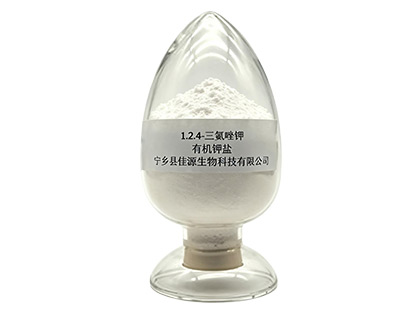
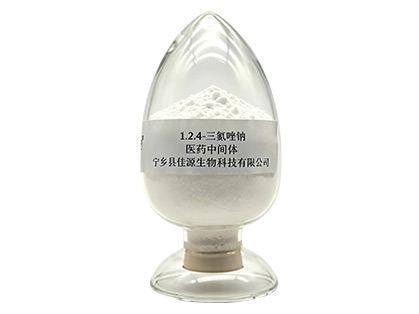
FAQ
How to ensure continuous supply of triazole intermediates during peak seasons? How is batch stability?
+ -A listed pesticide company has provided feedback that Jiayuan Biotechnology has established an emergency stocking mechanism for its triazole series products: regular products maintain a 30 day safety stock, coordinate production capacity 60 days ahead of peak season, and shorten the delivery cycle from 7 days to within 3 days. The product purity is stably controlled at 99.5% or above, with batch differences less than 0.3%, and there have been no interruptions in supply throughout the year leading to production shutdowns. Supply guarantee measures can be customized according to customer needs.
What are the practical improvements in shrimp growth and water environment by replacing zinc sulfate with zinc glycinate?
+ -A high-level pond comparative experiment of a certain aquatic feed enterprise showed that replacing inorganic zinc with zinc glycinate increased the average weight gain rate of shrimp by about 9%, improved the feed coefficient by about 6%, reduced the zinc content in the aquaculture effluent by 35-40%, shortened the molting cycle of shrimp by about 2 days, and increased the transportation survival rate by about 15%. The specific improvement range is affected by the breeding density, water quality, and basic formula.
Summer sows experience severe heat stress. Is there an anti stress plan that does not rely on chemical drugs? How is the effect?
+ -A large agricultural and animal husbandry group added dihydropyridine (100-150g/ton) to the diet of sows. After continuous use for 60 days, the feed intake of sows increased by about 8% under heat stress, the average weight of piglets weaned increased by about 5.5%, and the incidence of tail biting and fighting behavior in fattening pigs decreased by about 60%. Dihydropyridine is a non fungible additive that conforms to the trend of antibiotic free farming, and its effectiveness varies depending on the feeding and management conditions.
What are the effects of replacing inorganic ferrous sulfate with ferrous fumarate in feed on production stability and cost?
+ -According to the actual application feedback of a listed feed group, the use of ferrous fumarate and glycine iron complex instead of inorganic iron reduced the product clumping rate by about 85% under high temperature and high humidity conditions in summer, improving the mixing uniformity; At the same time, the hemoglobin content of piglets increases by 12-15%, which can save about 4500 yuan in injection and iron supplementation costs per thousand piglets. The specific cost-effectiveness needs to be calculated based on your company's formula and breeding scale.